
Collective Spotlight - CAUCE
How did you all meet?
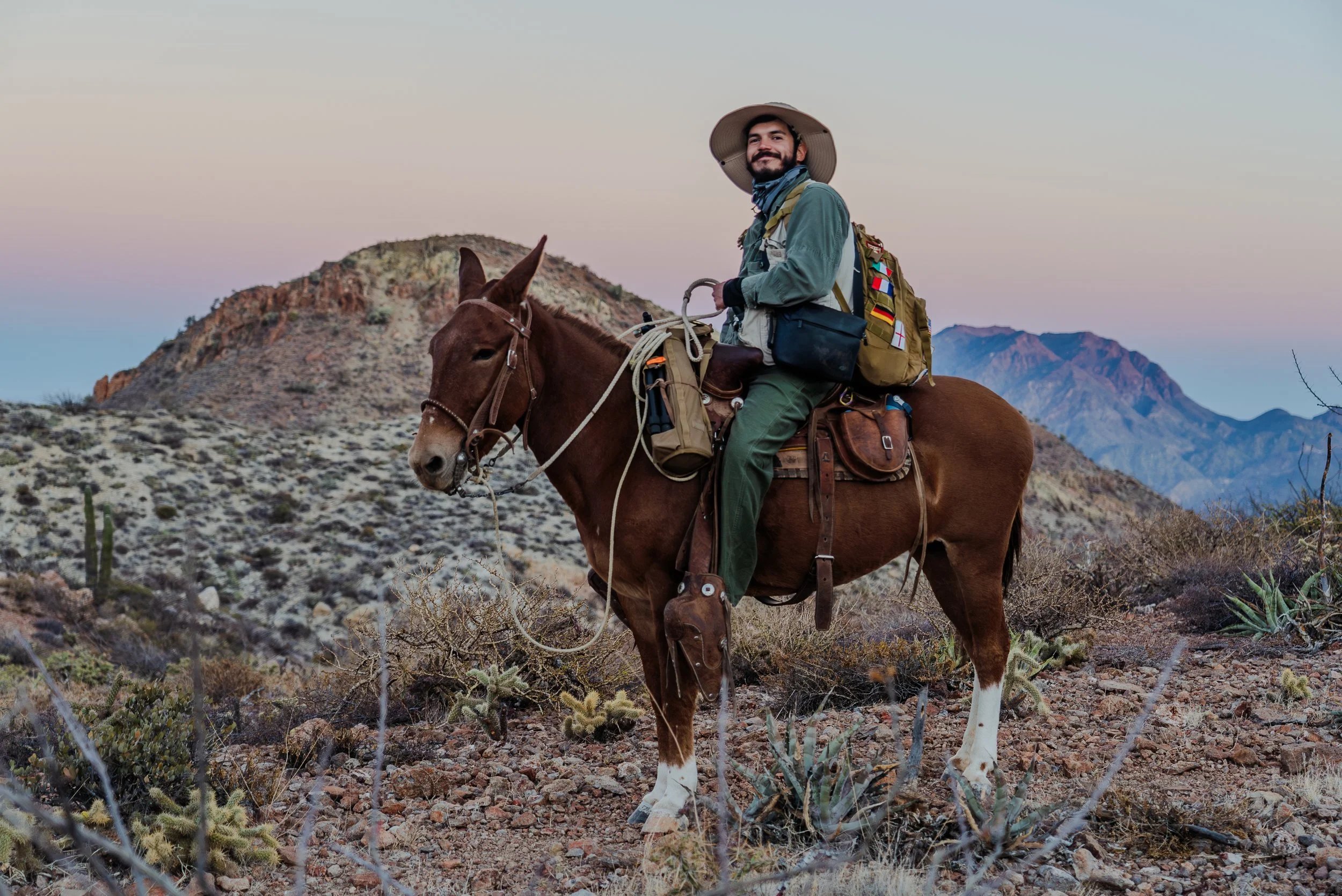
We met over the course of our careers in festival and industry spaces, because the three of us shared a very similar vision of nature documentary filmmaking, coexistence, and the impact these stories can have on the communities we work with. Jackson Wild played a key, connecting role in that process.
We were also at similar moments in our professional journeys, and what we were hoping to create strongly resonated between us. And, as often happens at large international events like these, there is almost an immediate chemistry among Latin Americans: we recognize each other, connect quickly, and become friends right away.
This happened at different moments over the past few years among the three of us, and out of that friendship and sense of complicity, CAUCE was born.
What inspired you to form CAUCE? Tell us a little bit about your goals and aims with CAUCE.
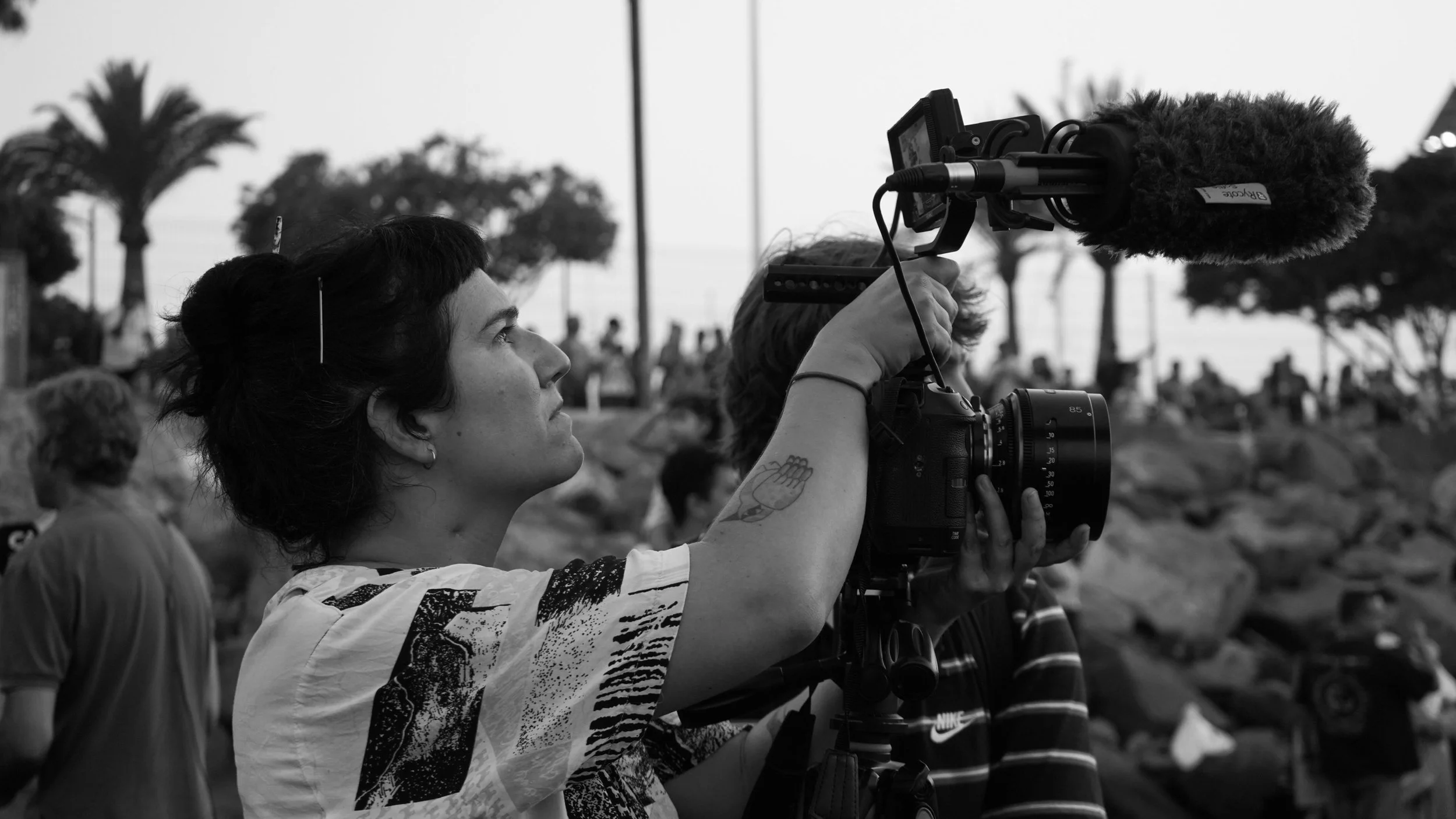
What inspired us to create CAUCE was the enormous potential we see in natural world stories coming from Latin America and in the Latino market more broadly. On one hand, the global industry has yet to fully recognize the strength of stories told in Spanish for Latino audiences—and their diaspora. On the other, the Latin American market itself often underestimates the value of nature storytelling for its own viewers.
That mismatch is where we see a major opportunity. Spanish-speaking audiences represent one of the fastest-growing segments across cultural industries—music, film, and television—and we believe that, as one of the most biodiverse regions on the planet, Latin America holds extraordinary potential for growth in natural history storytelling. This is precisely where CAUCE wants to position itself.
We ask ourselves: how do we create stories for Spanish-speaking audiences who are currently underserved? We believe it is not simply about translating existing content, but about developing stories rooted in cultural codes, humor, and the particular relationship with nature that characterize Latin American communities—and building narratives from that perspective.
How did you ALL become National Geographic Explorers and is it something you would recommend others in this field or profession? How has it impacted your careers?
The three of us became National Geographic Explorers through different short documentary projects, all centered on stories about communities and their relationship with the natural world.
In Lucía’s case, it was through a project called Shirampari, which tells the story of an Ashéninka boy in the Peruvian Amazon and his journey to catch a giant catfish as part of his passage into adulthood. For Samuel, it was the short film Una Nave Frágil (A Fragile Vessel), which is a portrait of a migrant family in Texas as they make sense of life after enduring one of the hottest seasons on record. And in Ángel’s case, through a short film currently in post-production titled Balam, which explores the coexistence between cattle ranchers and jaguars in Mexico’s Yucatán Peninsula.
Seeing how closely our work aligned in terms of themes and storytelling, we also recognized an opportunity to join forces and begin developing and producing projects together.
What are 3 things that excite you about the state of the Latin America Nature/Conservation Media industry?
Latin America has, in recent years, been building a strong appetite for documentary and non-fiction content. This is reinforced by a deep sense of belonging, identity, and pride in our cultures and our language, which has gradually shifted audiovisual consumption habits toward stories created from and for the region.
This ongoing process has created fertile ground for the production and distribution of nature and conservation non-fiction content, converging with an exceptional moment for Latin America within the cultural industries. The growing global interest in understanding the region’s cultures has allowed new audiences to discover the strength of our stories, our biodiversity, our challenges, and the vast market we represent.
At the same time, we are experiencing a moment of tremendous creative momentum around nature and conservation storytelling across Latin America. There is remarkable technical quality and a genuine commitment among Latin American creators to tell the stories emerging from this part of the world.
In this context, filmmakers, artists, and storytellers are determined to claim a meaningful space within the global natural history industry. This drive stems from recognizing that our region is a territory where stories of resistance, hope, and transformation converge — stories that today stand at the frontline of efforts to reverse the global environmental crisis.
The combination of these elements places Latin America at an ideal moment to take the next step. We envision CAUCE, together with key players such as Santiago Wild, Jackson Wild, NatGeo, and other allied platforms, acting as a catalyst to help move this momentum forward. We believe that this drive to tell stories is accompanied by a deep commitment to creating real impact within communities, fostering positive change, and addressing the environmental challenges we face at a global scale.
We could summarize this moment through three key forces:
The growing appetite of global audiences to discover the voices and wonders of Latin America.
The narrative and technical strength of Latin American storytellers.
The collective determination of Latinx storytellers to occupy a meaningful space within the nature and conservation storytelling industry.
What are you most proud of right now, personally and/or professionally?
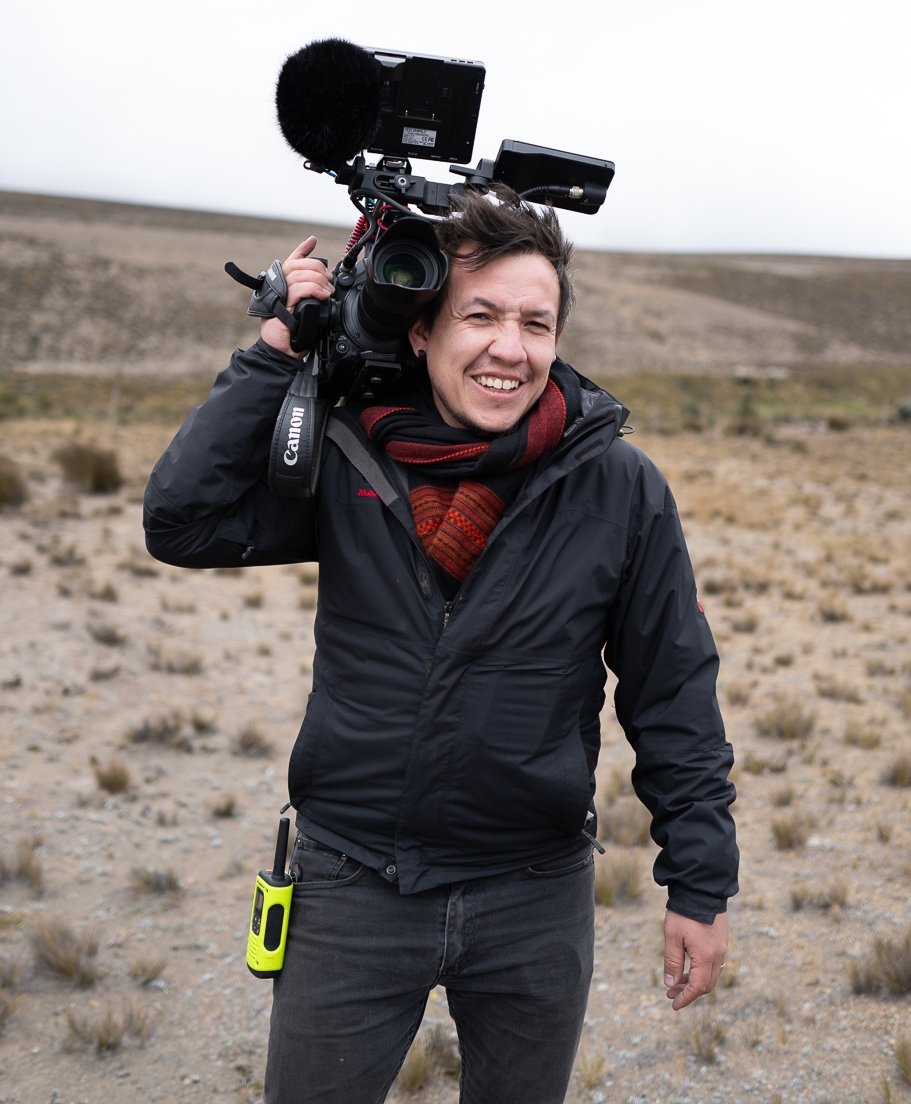
While the three of us are currently experiencing important milestones in our individual careers — Lucía and Samuel premiering short films at highly prestigious international festivals, and Ángel beginning the festival run of both a feature film and a short film, while each of us is also in production on a feature-length project — we feel that CAUCE has become the space that has allowed us to build community with other Latin American creators and to serve as a bridge between storytellers and industry players.
We feel deeply proud to be gradually positioning ourselves as a point of reference both for natural history creators across Latin America and for global partners interested in developing content in the region. At the same time, we are excited to align ourselves with the movements and initiatives that are currently working to strengthen collaboration and integration among audiovisual communities across the Global South.
In this sense, CAUCE has become a flagship project for us — a platform through which we can continue pushing boundaries, opening pathways for new generations of filmmakers and storytellers, and navigating these complex and rapidly changing times for the audiovisual industry and the world with optimism and hope.
What challenges have you faced or overcome in the industry?
As context, it is important to recognize that the natural history and wildlife production industry has historically been monopolized by English-speaking countries, which for a long time perceived their audience as primarily English-speaking. Fortunately, in recent years these paradigms have begun to blur, creating increasing space to question these approaches and to imagine new ways of producing and rethinking natural history content through more diverse and global perspectives. However, challenging such a deeply internalized conception within the industry has been a significant undertaking.
At the same time — and perhaps as a consequence of that same dynamic — Latin American players, both public and private, have rarely considered nature storytelling as a strategic segment worthy of sustained investment or long-term commitment. Part of our journey has therefore involved engaging in dialogue and helping demonstrate to regional stakeholders the stability, reach, and massive global market that natural history represents. Our first experience at Jackson Wild opened the door to a creative and production universe that, from Latin America, we had not imagined existed at such scale: a solid, interconnected, and vibrant ecosystem in which Latin American voices were still not strongly or widely represented.
Fortunately, in order to move forward with greater clarity and intention, we have received invaluable support through our participation in the National Geographic Field Ready Program. This has translated into mentorship and guidance from extraordinary professionals at National Geographic, Talesmith, Plimsoll, Nutopia, and other institutions and production companies that believe in the potential of CAUCE as a pioneering space for energizing the natural history storytelling ecosystem in Latin America. And, of course, we remain inspired by those who came before us — Latin American professionals such as René Araneda — who paved the way under far more challenging conditions and who have represented our region in these spaces for years, motivating us to keep moving forward.
What have you recently been working on or what are you currently working on within CAUCE?
Over the past year, we’ve built a cohesive slate that spans episodic series, feature-length films, and digital-first shorts — projects that explore the full breadth of what natural history can be today. Some, like Coyote Nation, operate within recognizable wildlife formats, allowing us to speak directly to existing broadcast and streaming spaces. Others push into hybrid or formally innovative territory, expanding what nature storytelling can look and feel like from a Latin American perspective.
Our strategy is very intentional. We want to speak the language of commissioners and programmers — and then offer something distinct within that framework.
Much of our recent work has focused on sharing and refining these projects across the ecosystem: broadcasters, production companies, NGOs, scientists, and impact partners. On one hand these conversations socialize and refine projects for market. They clarify where innovation meets appetite, and where we can responsibly push form without losing viability.
At the end of the day we understand we are operating in a moment of industry contraction and caution, where risk-averse strategies are prevalent. But we also see it as a moment of opportunity. As financing models and viewing habits shift, simply replicating established formulas feels increasingly unsustainable. CAUCE is not interested in being reactive. We are interested in building the scaffolding for stories that feel culturally rooted, formally ambitious, and future-facing — stories shaped by our own visual codes, humor, philosophical traditions, and narrative rhythms.
Alongside the slate, we are consolidating CAUCE as a brand with a clear set of values: rigor in craft, cultural specificity, intellectual depth, and long-term sustainability for filmmakers in our region. Ultimately, our goal is not only to produce compelling films, but to contribute to rethinking the development-to-distribution pipeline so that Latin American creators can build dignified, sustainable careers within the natural history space.
That is the work right now — building projects, building partnerships, and building the structure that allows both to endure.
What is in the future for CAUCE, and how can others get involved or support?
We’ve been thinking about CAUCE in stages.
The first year was about visibility and conviction. We needed to make it known that we exist — and to test, with confidence, whether there was real appetite for this kind of vision. Not just for individual projects, but for a movement around how natural history stories from Latin America can be developed and positioned globally. What we found was clear: there is appetite. And there are people who want to build this alongside us.
The second stage has been about positioning and refinement. Understanding exactly where we stand in the market. Sharpening our services. Stress-testing our slate. It has been laboratory work — weekly conversations between the three of us, taking ideas apart and rebuilding them, asking “what if?” and pushing projects from every angle. That transversal development work — idea generation, refinement, and testing — is truly the heart of CAUCE.
What comes next is taking these projects fully to market and making the entire endeavor sustainable.
At the beginning, we intentionally limited CAUCE’s scope to development and incubation. Each of us runs production companies in our respective countries, and we’ve spent more than a decade producing across different continents. We wanted CAUCE to have a clear focus — not to dilute it by trying to do everything at once.
But this year clarified something important: in order to truly demonstrate the kind of work we want to see in the world, we also need to create it under the CAUCE banner and with our own signature approach. That means stepping back into the writer’s room and behind the camera. Each of us has a distinct authorial voice, and filmmaking remains what we do best. Integrating that creative muscle into CAUCE strengthens our offering and reinforces that we are not only developing ideas — we know how to execute them, both in the field and beyond.
Another priority for the coming year is launching an in-person lab for Latin American natural world storytellers, which we hope to host in Mexico. The idea is to build a pedagogical space rooted in what we consider the signature CAUCE approach — rigorous, culturally grounded, formally ambitious, and market-aware without being market-bound.
In terms of collaboration, we are working to build a more structured pathway for receiving and developing ideas. Over the past year, much of our work has unfolded organically: meeting filmmakers, commissioners, content executives, programmers, and decision-makers at labs and festivals; setting up virtual coffees; listening, exchanging perspectives, refining instincts, dreaming together. Now we want to give that momentum structure. To systematize it, expand the network across the continent and its diaspora, identify the strongest ideas, and support them within our development framework with greater rigor and international projection.
To make this next step possible at the scale we envision, we are opening the door to strategic partners — investors, philanthropists, institutions, and companies who understand that investing in early development and ecosystem-building is a concrete way to shape the future of environmental storytelling from Latin America.
For now, it still begins simply: reaching out and setting up a virtual coffee. Many of our strongest collaborations began that way — with an honest conversation over a cafecito or a chela. But we are also ready for the next step: engaging in more structural conversations with those who want to invest, sponsor, or co-create this long-term vision. We believe that strengthening this platform does not only build CAUCE; it strengthens an entire generation of storytellers and responds to an audience ready to discover new ways of telling nature stories from our region.
